
The trillion dollar truce: Financial fallout of the US-Iran Peace deal

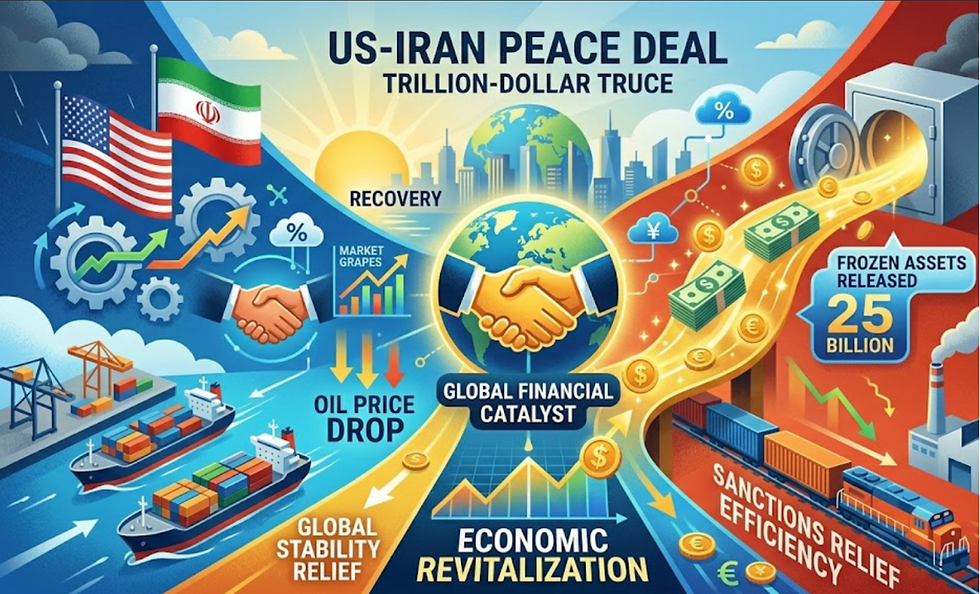
“Let the oil flow!” With those words, the Four month war that nearly pushed the global economy into a severe recession came to a sudden halt. This newly announced Pise deal between the United States and Iran is more than just a massive lift of burden from global diplomacy– It is a major catalyst for international markets.
Following the US naval blockade on Iranian ports, Pakistan and Qatar successfully mediated a deal in Geneva. At the heart of this war was a strait of Hormuz. This tiny pathway between Oman and Iran is the single most vital choke point in the global energy market as it is responsible for the transport of nearly 20% of the world's total petroleum. When the conflict closed the straight global energy supply choked, causing oil and gas prices to skyrocket. Under this new agreement, the strait will reopen and military operations on all fronts will terminate.
For corporations and daily investors, the Peace deal brings for supply chain stabilization and asset liquidation. Reopening the street of Hormuz eliminates the increased prices of oil, lowering energy costs directly, also reducing expenses for manufacturing shipping and airline companies boosting their profit.
Secondly, the deal releases major economic benefits for Iran. The US has agreed to release $25 billion in frozen Iranian assets held abroad. Additionally global powers, including UK, France, Germany and Italy, have expressed willingness to lift trade sanctions, however, this economic relief is strictly conditional as there will be a 60 day period of talks regarding dismantling of Iran's nuclear program. If negotiations stall, the economic sanctions and market quality could cease with it.
Immediate Unfrozen Assets: USD 25 Billion
Key economic driver: Full reopening of the Strait of Hormuz
Global Trade Impact: Restores 20% of Global oil supply
Negotiation Window: 60 Days to reach permanent nuclear terms
Sanctions Statuses: Conditional relief
The sudden end to hostilities provides an excellent buying environment for sectors that faced high prices due to energy prices and shipping costs such as Airlines and retail manufacturing. The stock market is likely to experience a relief as global inflation eases. However, investors should approach all dependent stock with caution as all supplied rushes back into the market crew process will drop, potentially reducing short-term quarterly earnings of domestic or producing companies. Furthermore, the current market optimism must be treated as temporary–As the real long-term financial stability won't be fully secured until the nuclear talks are over.


Comments